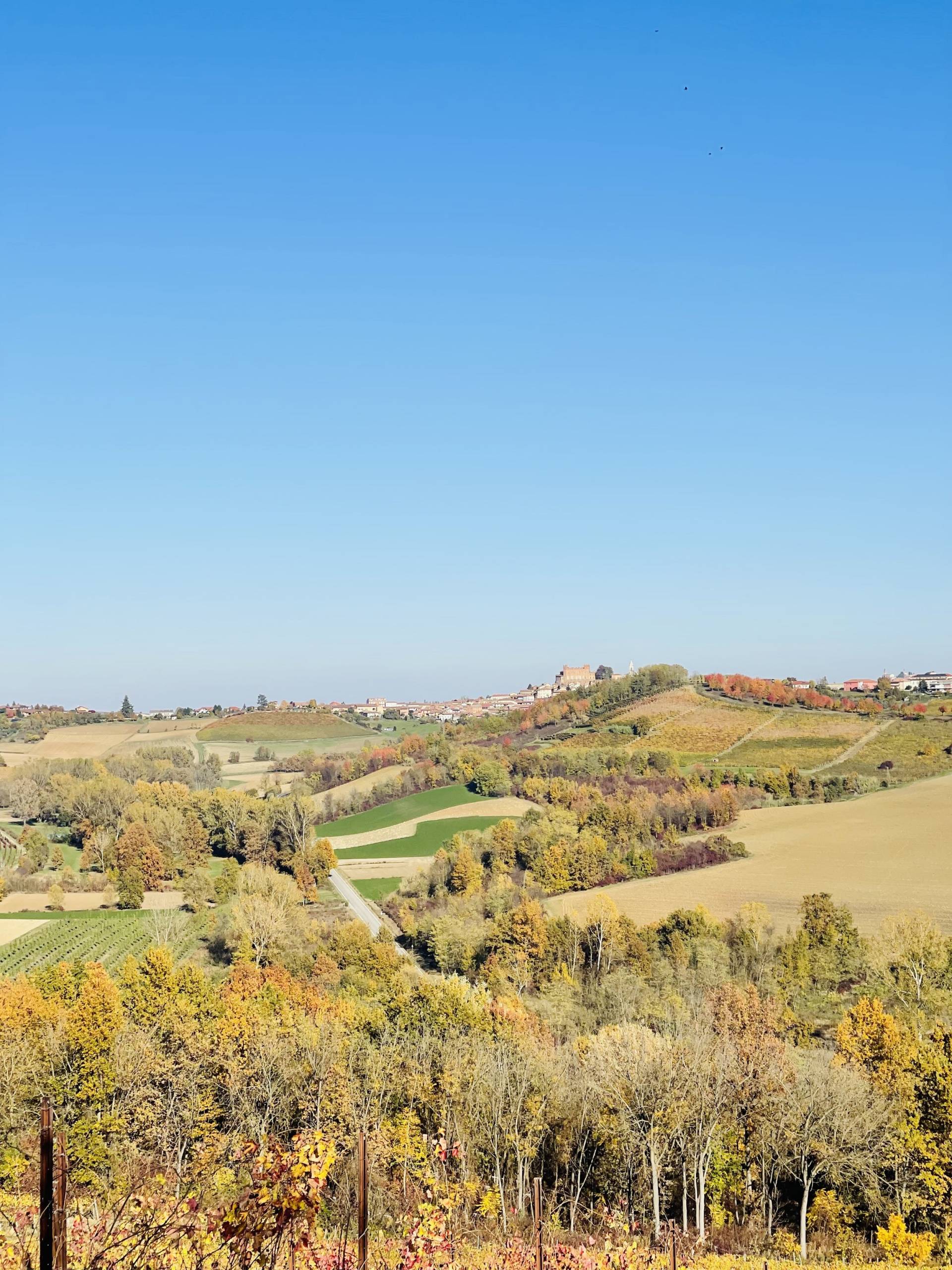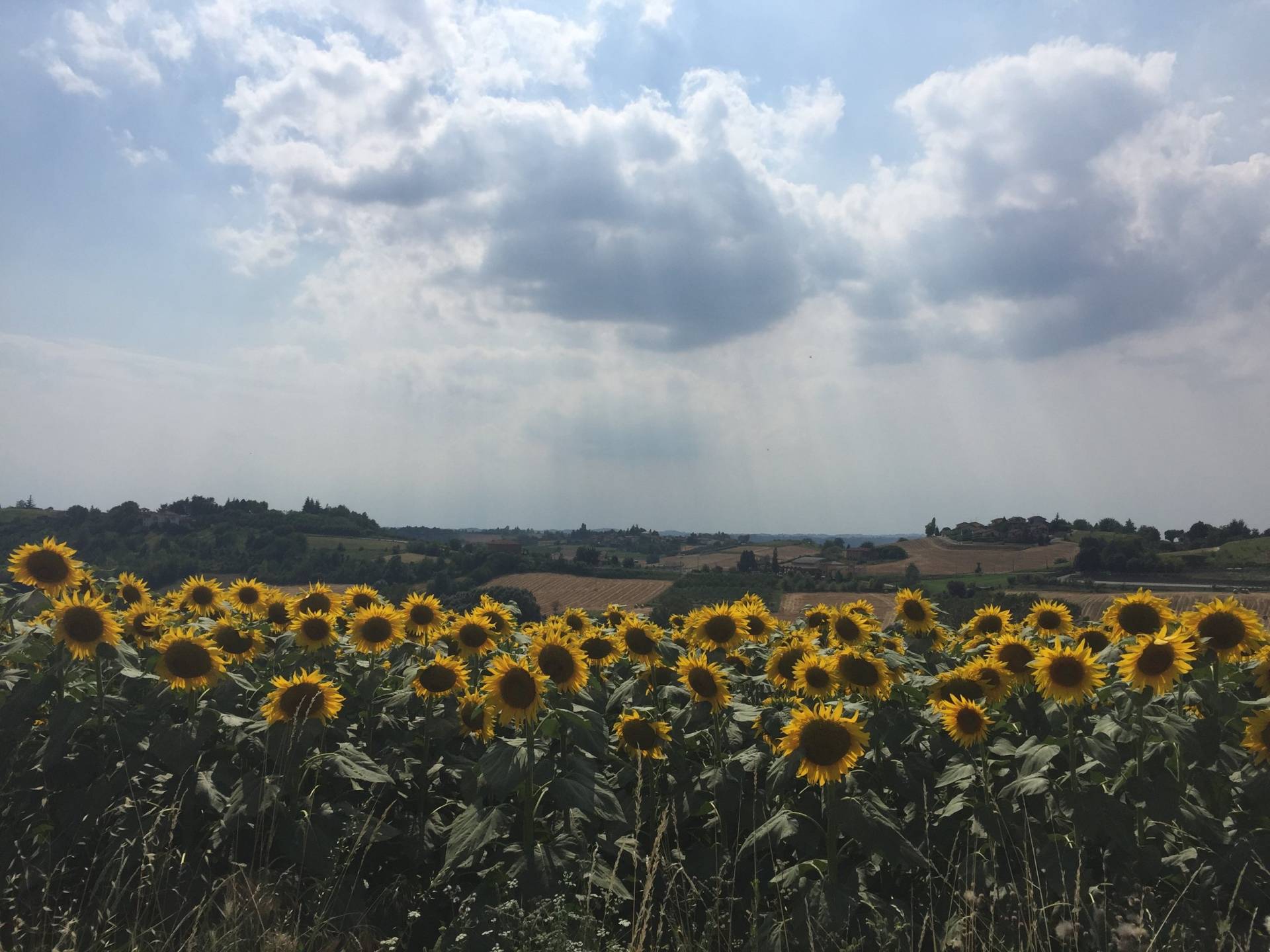


In Piedmont, between the provinces of Alessandria and Asti, there is a vast region called Monferrato. Here the gaze gets lost in the seamless continuity of hills dotted with vineyards, lovely villages, and magnificent castles – the legacy of the great figures who shaped the history of Piedmont and Italy.
Monferrato: history, landscape and wines
This territory, which consists mostly of hills, is very large, with many towns and villages spread between the provinces of Asti and Alessandria. Southward, it stretches toward the Ligurian cities of Genoa and Savona, where the Ligurian Apennines rise. To the east it borders the other two wine regions of Langhe and Roero and to the northeast the Lomellina area in Lombardy. Westward it merges into the hills around Turin.
The three areas of Monferrato
In recent years, Monferrato has been divided into three main areas:
Basso Monferrato (Low Monferrato) is the area around the city of Casale Monferrato. The name “low” refers to the lower and smoother hills, which do not reach 400 meters in altitude.
Monferrato Astigiano embraces most of the province of Asti, except for the Langa Astigiana area.
Alto Monferrato (High Monferrato) is the southern part of the region, named for the fact that the territory merges with the Apennines and the hills are higher in altitude.
The legend of Aleramo
The true origin of the name Monferrato is still debated, but there is a local legend about the first Marquis of this region: Aleramo.
Around the year 960 AD, Aleramo swore allegiance to Emperor Otto I. He received the title of Marquis and with it a large territory to rule over, but he fell in love with the emperor’s daughter, the beautiful Alasia. Otto was against this relationship and, because of this, the couple fled toward southern Piedmont, Aleramo’s birthplace.
However, Aleramo bravely fought against the Saracens, who were raiding inside the emperor’s territories. Otto I was so pleased that he forgave the couple and decreed that Aleramo would receive as his fief all the land that he could cover in a three-day ride on a wild horse. During the ride, he had to stop to shoe his horse using a brick, and in the end the region of Monferrato was born. According to legend, the name comes from “mun” (brick) and “frà” (horseshoe) in the local dialect.
From Aleramo to the Kingdom of Italy
As for the real historical origins of Monferrato, they are closely tied to the figure of Aleramo. Aside from the legend, he truly was a nobleman under Emperor Otto I, around the year 1000 AD. During this period, those in service to the emperor began accumulating power and land and looking for ways to pass them on through inheritance. This is how the main noble families that shaped history were born.
Aleramo founded his dynasty, the Aleramici family, and with it the March of Monferrato was established. His heirs ruled the region for four centuries.
Throughout the Middle Ages, this region was the stage for battles between noble families and city-states. The Aleramici eventually lost control, and the title of Marquis passed first to the Paleologi family and then to the Gonzaga of Mantua. Under the Gonzaga, Monferrato experienced a new cultural flourishing. Eventually, Spain conquered the territory, but it was soon drawn into the War of the Spanish Succession.
In the 18th century, Monferrato was formally assigned to the Habsburg family of Austria, but it was directly ruled by the House of Savoy – the future royal family of unified Italy – thanks to the Treaty of Utrecht in 1713.
In the 19th century, the region went through the turmoil of the Napoleonic wars but managed to rise again. Monferrato was later involved in the national movements that led to the unification of Italy in 1861, which began in Turin.
Today, Monferrato reflects its long and complex history. People come from all over the world to enjoy its wines, food, culture, and beautiful landscapes.
Monferrato and UNESCO
This region has been listed twice as a UNESCO World Heritage site: once as a wine-producing landscape together with Langhe and Roero, and again as part of the “Sacri Monti of Piedmont and Lombardy” thanks to the “Sacro Monte di Crea”.
The “Sacri Monti” (Holy Mountains) are marvelous architectural complexes in Piedmont and Lombardy. They stand on hilltops and are made up of sequences of chapels with paintings and sculptures representing Catholic themes. They were built between the 15th and 19th centuries, during the Catholic Reformation, as a more direct and accessible way to communicate the stories of Mary, Christ, and the saints.
As a UNESCO wine-producing landscape, Monferrato is notable not only for its vineyards, but also for the infernot. These small underground rooms were dug into the local “pietra da cantone” stone and used as secret cellars to store wine and food. The temperature and humidity stay naturally stable, creating an ideal environment for preserving the most precious bottles. Farmers built these architectural marvels during the long and harsh winters, and each cellar is unique – many are still waiting to be discovered.
Another reason for Monferrato’s UNESCO recognition is the group of “Underground Cathedrals” in the town of Canelli, which you must not miss. Dug up to 32 meters into the tuff stone in the 19th century, they are called cathedrals because they are huge underground halls used to store thousands of bottles of sparkling wine, produced by the town’s four historic wineries: Gancia, Coppo, Contratto, and Bosca.
Visiting an Underground Cathedral means having the chance to taste the original Italian sparkling wine – two birds with one stone. Canelli is where the first Italian sparkling wine was created in 1865 by Carlo Gancia, using the classic method.
Wines and traditional cuisine of Monferrato
The most famous wine from Monferrato – though not the only one – is certainly Barbera (you can read more about Barbera wine here). But it is just one of many wines produced in this area. You might not know that Moscato d’Asti is also traditionally from Monferrato. Many people are not fans of this sweet wine, but if the winemaker does a good job, the result is a beautifully balanced wine where sweetness and the natural aromatics of the grape work in harmony.
The wines of the area pair perfectly with the traditional cuisine of Monferrato. Two dishes worth mentioning are rabaton and agnolotti monferrini. Both are main courses: rabaton are similar to gnocchi, but made with chard, ricotta, and eggs, while agnolotti monferrini are ravioli filled with roasted meat.
For dessert, Casale Monferrato is the birthplace of krumiri cookies. Invented in 1878 and shaped like a mustache, they were probably created as a tribute to Italy’s first king, Vittorio Emanuele II, who died in the same year and was famous for his impressive moustache.
Monferrato today
In conclusion, Monferrato is a region where legend and history converge. Its rich cultural heritage – from mythical tales to major historical events – makes it a fascinating destination for anyone interested in the past. Whether you are witnessing the ancient Palio di Asti or visiting the region’s impressive castles, Monferrato offers a captivating experience that bridges the gap between legend and history.